

If you’ve spent any time looking at LED stage lighting spec sheets, you’ve seen both terms: RGB and RGBW. Most listings don’t explain the difference. Some buyers assume it doesn’t matter much. It does — and understanding why will save you from buying the wrong fixture for your venue.
This guide explains the practical difference between RGB and RGBW, when each one makes sense, and how to decide which is right for your specific situation.
The Basic Difference
RGB stands for Red, Green, Blue. An RGB LED fixture mixes those three colors to produce a wide range of colors across the spectrum.
RGBW adds a fourth element: White. That single addition changes what the fixture can do in ways that matter significantly in real venue conditions.
Why the White LED Matters
Mixing red, green, and blue light produces what’s called additive color mixing. In theory, combining all three at full intensity produces white. In practice, the “white” produced by mixing RGB LEDs looks noticeably different from true white light — it tends toward a cool, slightly cyan-tinted result that reads as white in a dark room but looks colored and unnatural in any context where genuine white light is needed.
The dedicated white LED in an RGBW fixture produces true white light independently of the color mixing process. This matters in three specific ways:
Cleaner whites for speeches, ceremonies, and ambient lighting. If your venue hosts events where people need to see each other clearly — wedding ceremonies, corporate presentations, dinner receptions before the dance floor opens — RGB white will look wrong. RGBW white looks correct.
Better pastel and skin tones. Soft pink, warm peach, light lavender — these colors are difficult to produce accurately with RGB alone. Adding white to the mix allows for the kind of soft, desaturated tones that photograph well and look flattering on people.
Higher overall brightness at neutral colors. Because the white LED contributes direct output rather than mixed output, RGBW fixtures are generally brighter at neutral and pastel color settings than RGB fixtures with equivalent LED counts.
Where RGB Still Makes Sense
RGB fixtures are not obsolete. They have a legitimate place in specific applications.
Pure color saturation applications. For deep, saturated colors — vivid red, pure green, electric blue — RGB fixtures can match or exceed RGBW performance. The white LED in an RGBW fixture doesn’t help when you want maximum color intensity.
Budget-constrained purchases where white output isn’t needed. If your venue is a nightclub or bar that runs saturated color lighting all night and never needs white light, the added cost of RGBW may not be justified.
Simple color wash applications. For basic color washing where precision doesn’t matter — background color on a stage, simple atmosphere in a small room — RGB delivers adequate results at lower cost.
Where RGBW Is Worth the Premium
RGBW is the better choice in most venue and rental applications because most venues need more than just saturated colors.
KTV and karaoke rooms. These spaces run a mix of energetic color effects and quieter atmospheric moments. The ability to produce clean whites and soft pastels — not just vivid primaries — makes the space feel more versatile and more professionally lit.
Wedding and event venues. Ceremonies need white light. Receptions need warm amber and soft pink. Dance floors need vivid color. A single RGBW fixture can cover all three without switching equipment.
Rental inventory. A rental operator needs fixtures that work across multiple event types. RGBW covers a wider range of client briefs than RGB, which means fewer situations where you have to explain to a client why the lighting doesn’t look quite right.
Venues where people will be photographed. RGB white looks wrong in photographs. RGBW white looks correct. In an era where every venue guest is a potential social media post, this matters more than it used to.
The Price Difference: Is It Worth It?
RGBW fixtures cost more than comparable RGB fixtures. The premium varies by manufacturer and fixture type, but it’s real.
Whether it’s worth it depends on one question: will your venue ever need white or pastel light?
If the answer is yes — even occasionally — RGBW is worth the premium. The cost difference per fixture is small compared to the cost of buying the wrong product and replacing it, or running events where the lighting doesn’t meet client expectations.
If the answer is genuinely no — your venue runs saturated color lighting exclusively and will never host an event requiring white or neutral light — RGB is a reasonable choice.
For most buyers reading this, the answer is yes.
A Note on LED Ratios in RGBW Fixtures
Not all RGBW fixtures are configured the same way. The ratio of red, green, blue, and white LEDs varies by design, and that ratio affects color output significantly.
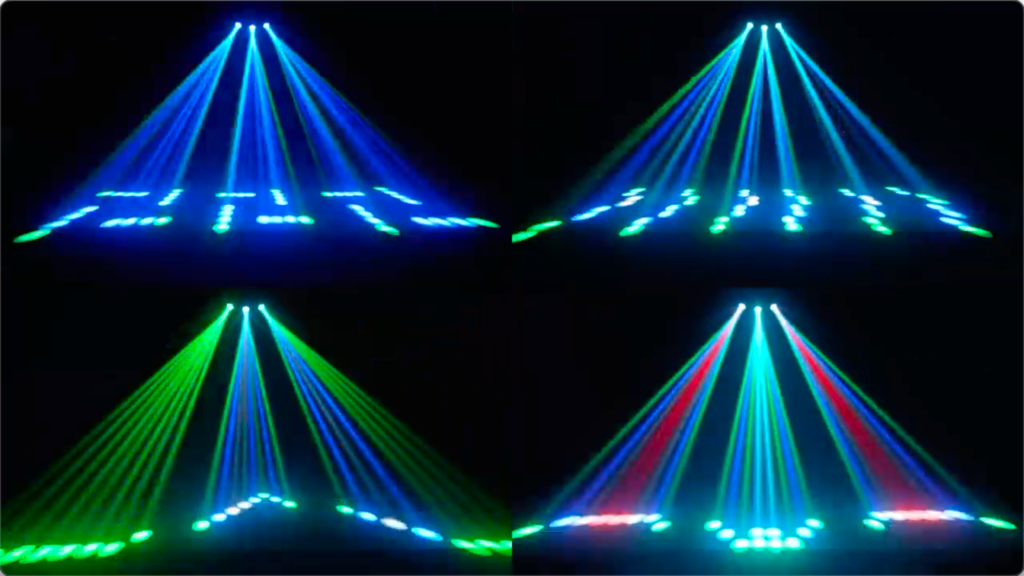
The LED Airship King MD-05, for example, uses 192 LEDs arranged as R4, G28, B20, W12. That specific configuration — weighted toward green and blue with a meaningful white component — is calibrated to produce clean color mixing across the full spectrum, including the warm whites and soft pastels that simpler RGBW configurations struggle with.
When comparing RGBW fixtures, ask about the LED ratio, not just the total LED count. A fixture with 200 LEDs but a poorly balanced ratio will underperform a fixture with 150 LEDs and a well-designed configuration.
The Simple Decision Framework
Choose RGB if:
- Your budget is limited and white output is genuinely not needed
- Your application is pure color saturation with no neutral or white requirement
- You’re buying for a specific short-term use case, not long-term inventory
Choose RGBW if:
- Your venue hosts events requiring white or pastel light at any point
- You’re building rental inventory that needs to cover multiple event types
- People will be photographed or filmed under your lighting
- You want a fixture that performs well across the full range of venue applications
For most KTV operators, bar owners, event rental businesses, and venue managers in Southeast Asia and the Middle East — which describes most of the buyers reading this — RGBW is the right answer.
Looking for RGBW effect lights for your venue or rental inventory? Get a factory quote →
Related posts:
- LED Airship King MD-05 Review: Is This 3-in-1 Effect Light Worth Buying in Bulk?
- DMX512 vs Music Sync: Which Lighting Control Mode Is Right for Your Venue?
- How to Choose the Right LED Effect Light: A Buyer’s Checklist